Eyes on the Treeline: Building a Moray Cabin Weekend Around Pine Martens
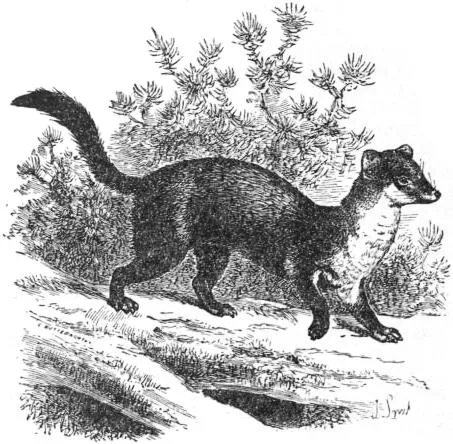
Photo: AnonymousUnknown author, Public domain, via Wikimedia Commons
The quietest thing to do after dark in Moray
There is a moment, usually about twenty minutes after the last of the light has gone, when the treeline behind a cabin stops being scenery and starts being habitat. Something moves along a branch with a weight that a red squirrel does not have. A pale bib catches what is left of the sky. Then it is gone, and you are left holding a cooling mug of tea and grinning at nothing in particular.
Pine martens were brought close to extinction in Britain by persecution and habitat loss, clinging on in the north-west Highlands. Recovery has been slow but real, and Moray sits inside one of the species' modern strongholds, alongside Strathspey and parts of Aberdeenshire. For a cabin guest, this is the one native predator you have a genuine, repeatable chance of watching from a deck chair.
It also makes a very good excuse for a weekend that has nothing to do with whisky.
What a good marten cabin looks like
Pine martens are edge animals. They like structural variety — mature Scots pine and birch to shelter and rest in, scrub and deadwood full of small prey, and open ground they can cross quickly. A cabin in the middle of a dense plantation is less promising than one perched where woodland meets a garden or a rough field.
Beyond the habitat, look for these details when you are browsing listings:
- An unlit exterior. Security floodlights and decorative festoon lighting are the enemy of a good vigil.
- A raised deck or balcony with a clear view into the trees rather than straight at a fence.
- Bird feeders in the garden. Martens investigate feeders, both for the food and for the rodents that turn up for it.
- Mature trees close to the building, ideally with old woodpecker holes, crevices or a known den nearby.
- A quiet site. Hot tubs at midnight and large group bookings do not mix well with cautious nocturnal mammals.
- An owner who knows the answer to the question: have you seen them here, and roughly when?
That last one matters most. Local knowledge compresses weeks of guesswork into a two-minute conversation.
When your odds are best
Pine martens do not hibernate, so any month has a chance. The pattern still varies.
February to April is the sweet spot. Courtship activity picks up, males range widely, and the animals are vocal — the screech is startling the first time you hear it. Late snow is a gift, because tracks will tell you exactly which route they are using.
May to August brings short, bright nights. Daylight lingers past ten in June, which compresses activity into a narrow window, but it also means long warm evenings on the deck with the midges, so pack accordingly. Family groups can be good value later in the summer.
September to November sees young animals dispersing and feeders getting busy again. Dusk falls fast, which suits anyone who does not fancy staying up late — in early November it is properly dark by about half four.
December and January offer the longest nights and the cheapest cabin rates. Cold, but quiet, and the trees are bare enough to see movement at distance.
Fieldcraft, and why feeding is not the answer
It is tempting to scatter peanuts and wait. Resist it. Feeding pine martens at unregulated sites encourages dependency, draws in rats, and concentrates animals in ways that help disease spread. Scottish guidance on the species leans firmly towards watching rather than provisioning, and a marten that has learned to associate people with food loses its wariness fast.
Instead:
- Arrive before dusk and settle in. Movement and noise at the wrong moment ends the encounter before it starts.
- Use red light only, low power, and never shine straight into an animal's eyes. A cheap torch with a red filter taped over the lens is better than a phone torch, which is useless and disruptive in equal measure.
- Keep your distance, stay seated, and leave the flash off.
- Skip the perfume and the noisy snack wrappers.
- Leave dogs indoors after dark.
- Never approach a den or a tree cavity. Pine martens are protected under the Wildlife and Countryside Act 1981, and disturbing a place of shelter is an offence.
- Log your sightings with the local biodiversity records centre — casual records genuinely help conservation work.
If you want a near-certain encounter
Wildlife-watching operators around Grantown-on-Spey and the Cairngorms run evening hides where martens are regular visitors under controlled conditions. Hides are small, so book ahead, and expect a reasonably early start to the evening. It is also a good fallback plan for a night when the weather is filthy and sitting in a wet garden has lost its charm.
Kit that actually earns its place
A pair of 8x42 binoculars and a red-filtered torch will cover most of it. Add a thermos, a camping mat to sit on, and a headtorch with a red mode for getting back inside without wrecking your night vision. A thermal monocular is expensive but transformative if you plan to do this often — it turns a whole treeline into a moving map.
In summer, a midge net and repellent are not optional extras. In winter, more layers than you think.
A weekend that has room in it
Friday — arrive in daylight, walk the boundary of the wood to learn the layout, and note any runs, droppings on logs or scuffed ground under feeders. Cook something slow. Sit out for half an hour at dusk, even if nothing shows.
Saturday — a proper forest walk in the morning for red squirrels, crossbills and the general business of the wood. Nap in the afternoon; it is not laziness, it is preparation. Early supper, then a ninety-minute dusk vigil with the flask.
Sunday — a dawn sit for birds and squirrels, a long breakfast, and home. If you booked a hide for Friday or Saturday night, shift the vigils around it.
The other residents
The supporting cast is strong. Badgers work the same edges, bats hunt the open water at dusk, tawny owls call from October onwards, and roe deer will be in the field before you have finished your first coffee. Otters use the Spey, though they demand more patience than most people bring to a weekend.
Which is the point, really. A marten weekend is not a tick-list exercise. It is a couple of nights of sitting still in a quiet place, paying attention, and letting the wood get on with its evening.